Oil consumption
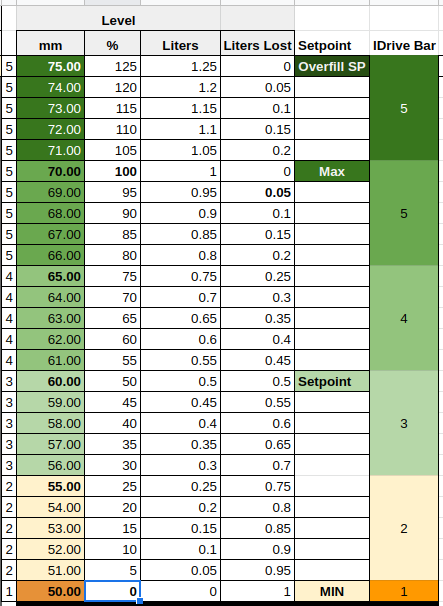
Maximum oil consumption
Beyond the rates above, the owner needs to take action. Leaving the engine excessively burning oil will inevitably result in semi-clogged or fully clogged catalytic converters, depending on the burning rate.
In worse cases, misfires, cylinder compression loss, cylinder bore scoring and fatal pre-ignition if the rate reaches its stage 3. Check the FAQ.- Stage 1: 1L/4000kms
- Stage 2: 1L/2500kms
- Stage 3: 1L/10000kms
Excessive Oil consumption in a NA engine.
Piston / Piston Rings
1Worn Piston Oil rings.
All N52b25 prior to June 2010, have presumably faulty pistons with mal-positioned oil drain holes plus low-tension oil rings which are designed for cylinder bores high-lubrication. Click here to Read the corresponding service bulletin (SIB)Facts
- While the N52b30 pistons were made by Mahle (CR 10.7:1), The faulty N52b25 pistons were made by KolbenSchmidt (CR 11.0:1).
- BMW in its SIB claims the position of oil drain holes is unfavourable especially when the engine sees lots of short drives and start/stop events. But does not indicate what happens technically (Clogged oil drain holes? Gunked oil rings? or Both?)
- Experience shows that the N52b25 due to its higher compression ratio, is very sensitive to gasoline quality. It was designed to run optimally with RON100 fuel. Repetitive usage of dry RON95 (Bare minimum of legal additives), short trips, excessive idling, lack of spiritied driving (High engine RPMs), makes for a fast clogged piston oil control ring and drain holes.
- The piston design of the N52b25 is inherited from the BMW N42 piston (Made by KolbenSchmidt and has also 4 oil drain holes offset on the skirt side)
- An academic study from 2018 proved that the optimal number of piston drain holes is 4 and their optimal position is on the skirt side. This is what we do see on the upgraded 2020 Mahle piston made for BMW B58 engine. What the study missed is that this is only the case when the operating conditions are favorable. In real world cases, oil drain holes on the skirt side get easily clogged by carbon/deposits. This is exactly the case of Toyota 2006-2009 2.4L petrol engine 2AZ-FE. This engine with oil drain holes on the skirt side, suffered from oil burning issues after a certain mileage. Toyota fixed the issue by moving the holes to the wrist pin side and many users by drilling two additional holes on the wrist pin side on old pistons when rebuilding the engine.
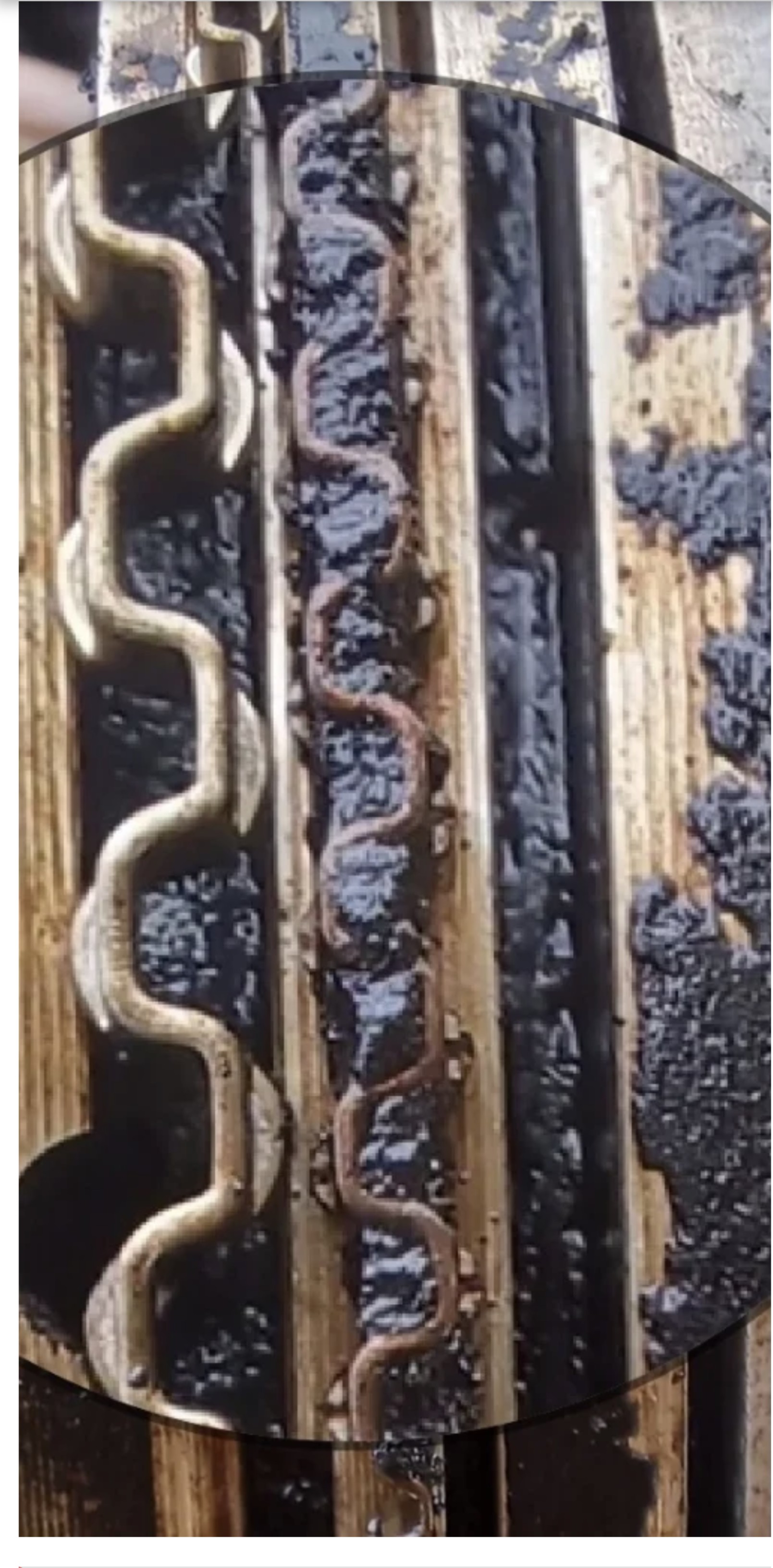
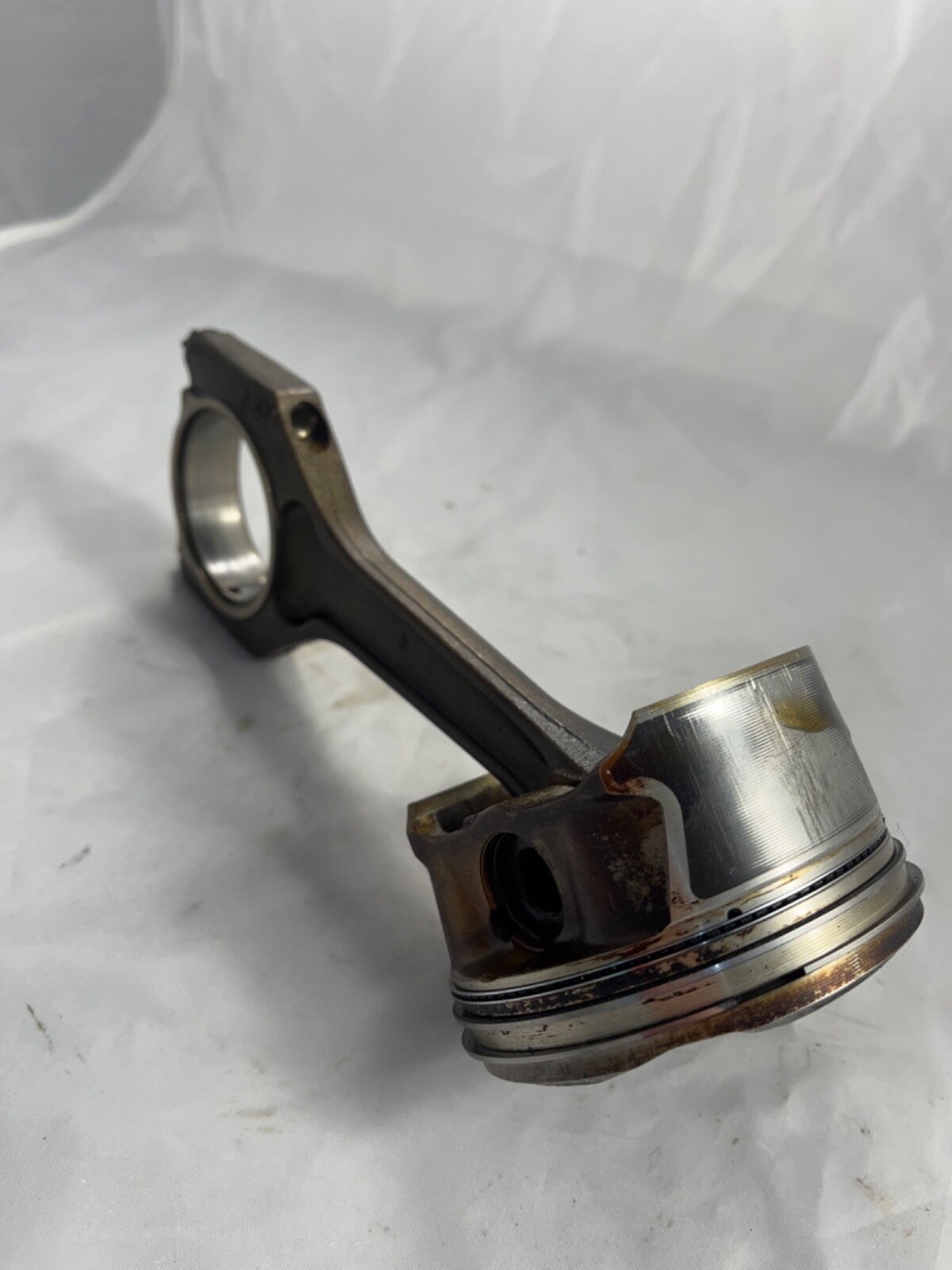
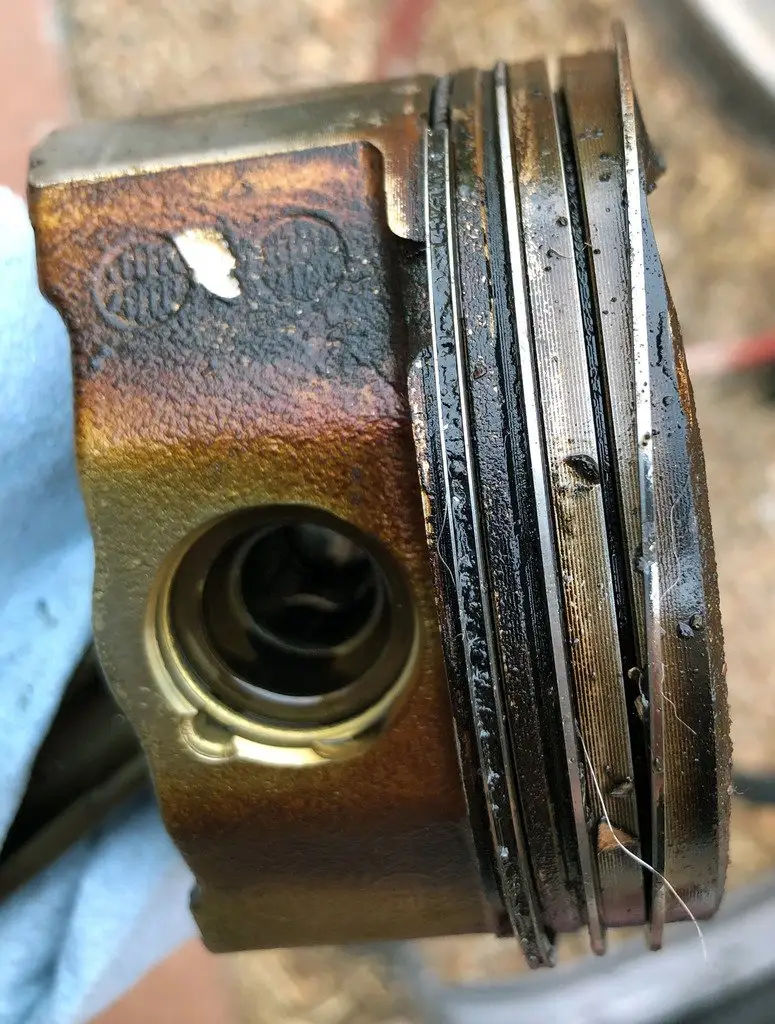
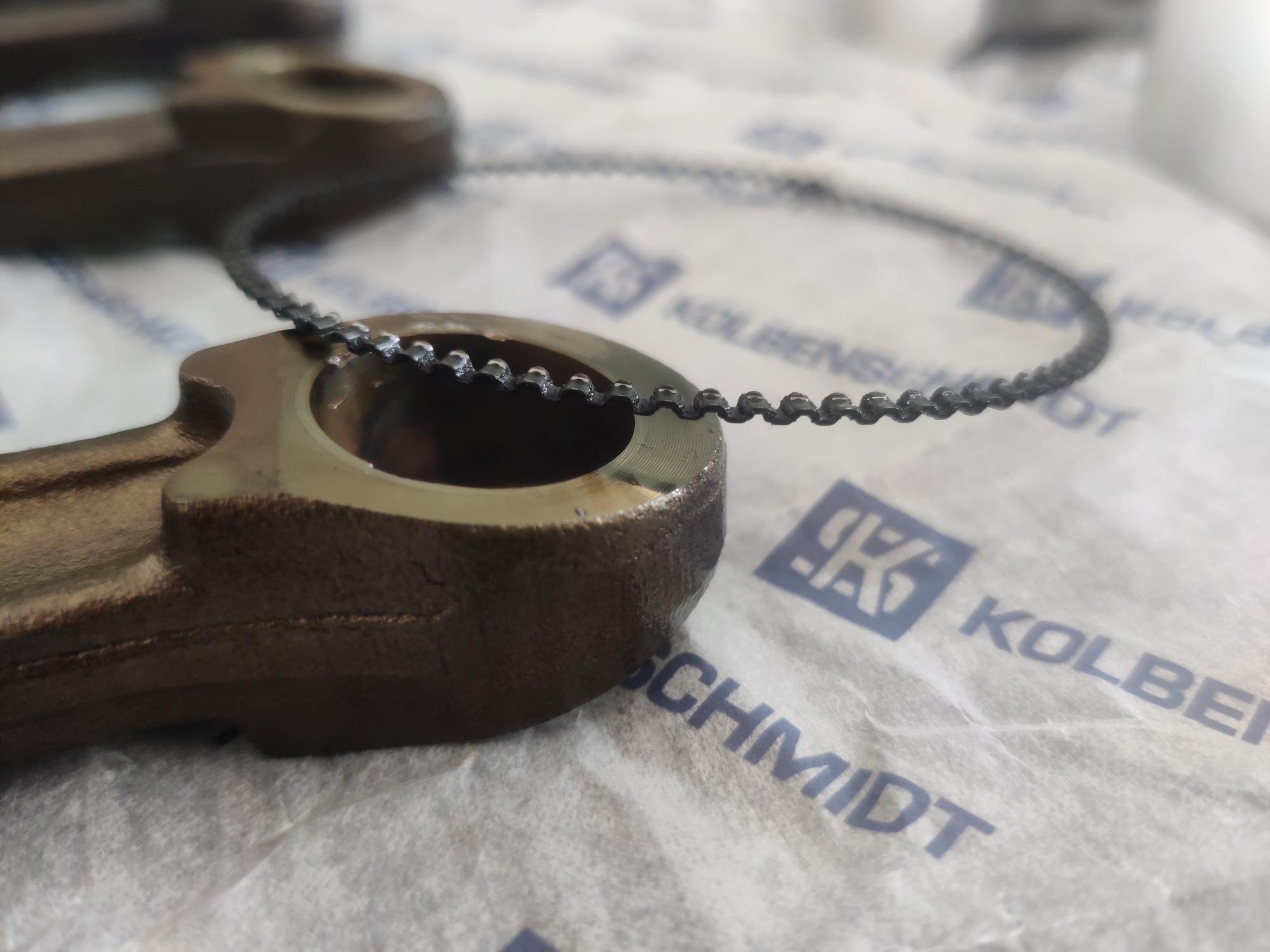
N52b25 old version piston over-sludged oil control ring.
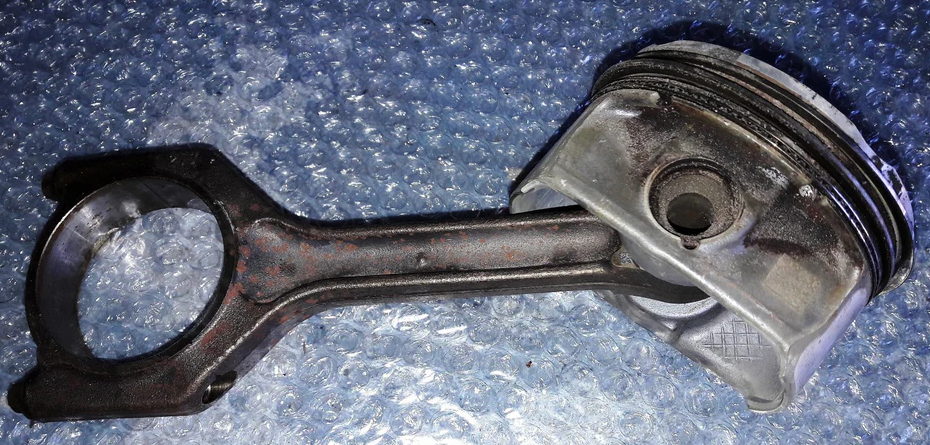
N52 piston clogged oil control ring.
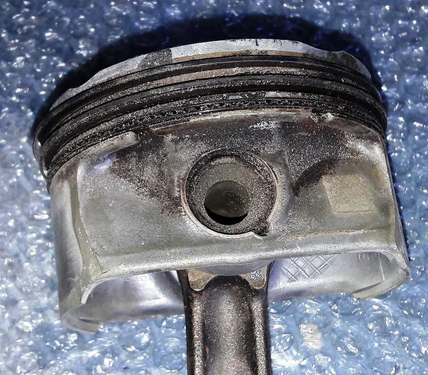
N52 piston over-sludged rings.
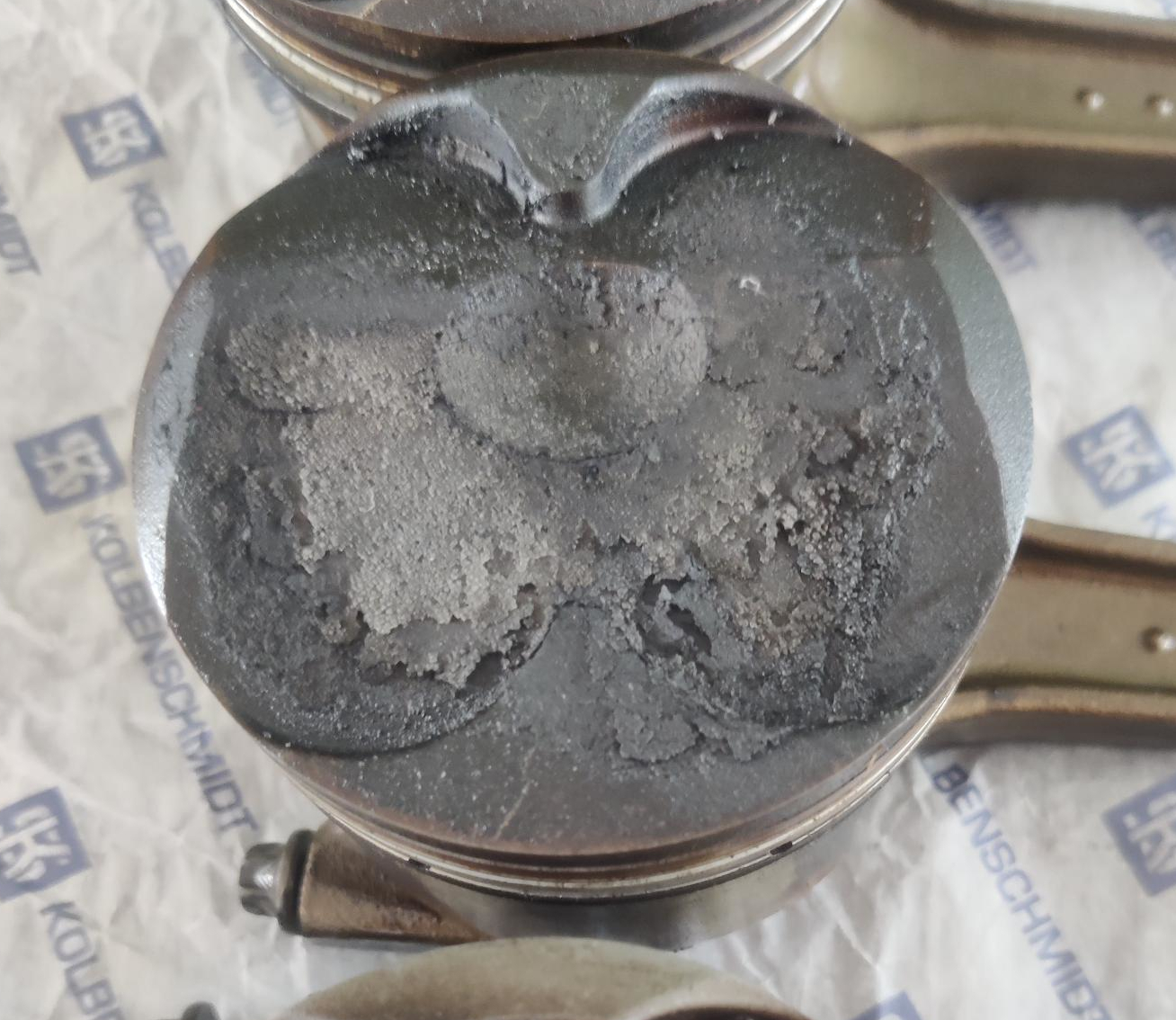
N52b25 old version piston coked piston crown caused by excessive oil burning.
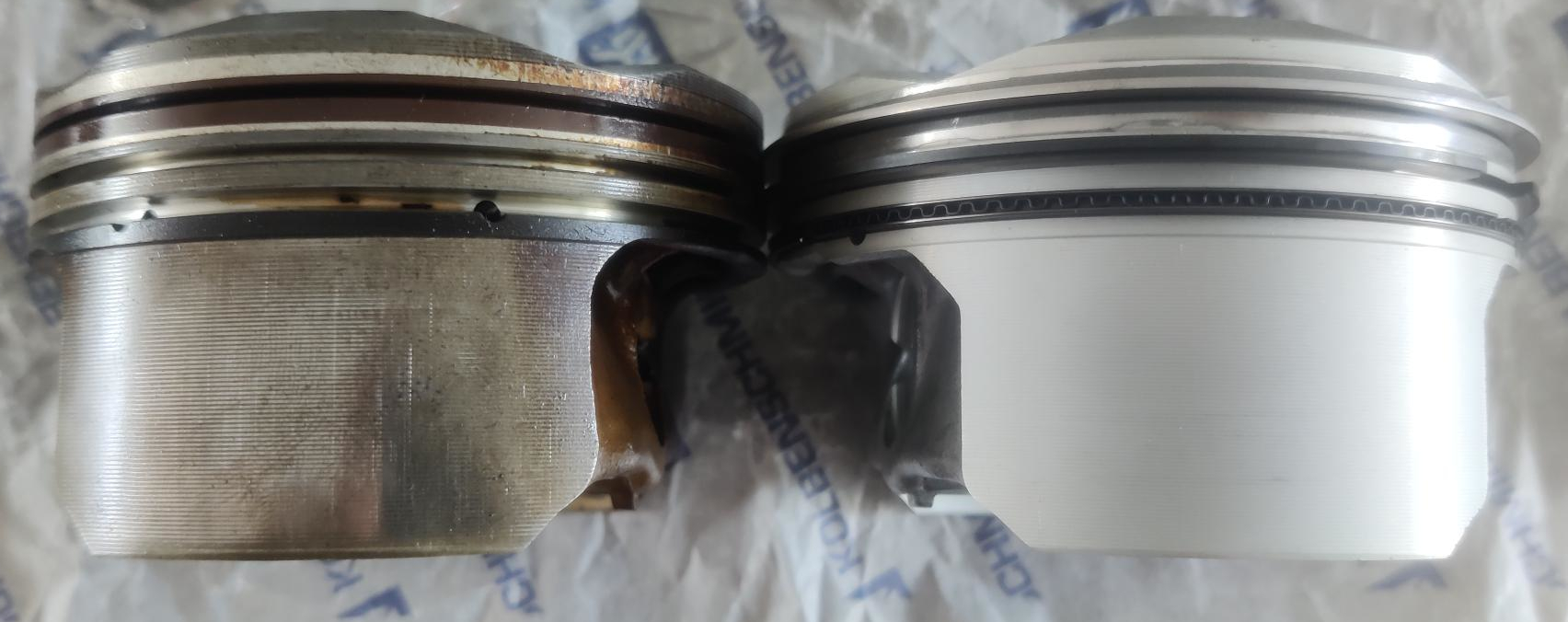
N52b25 old version piston vs updated piston (Re-positioned oil drain holes).
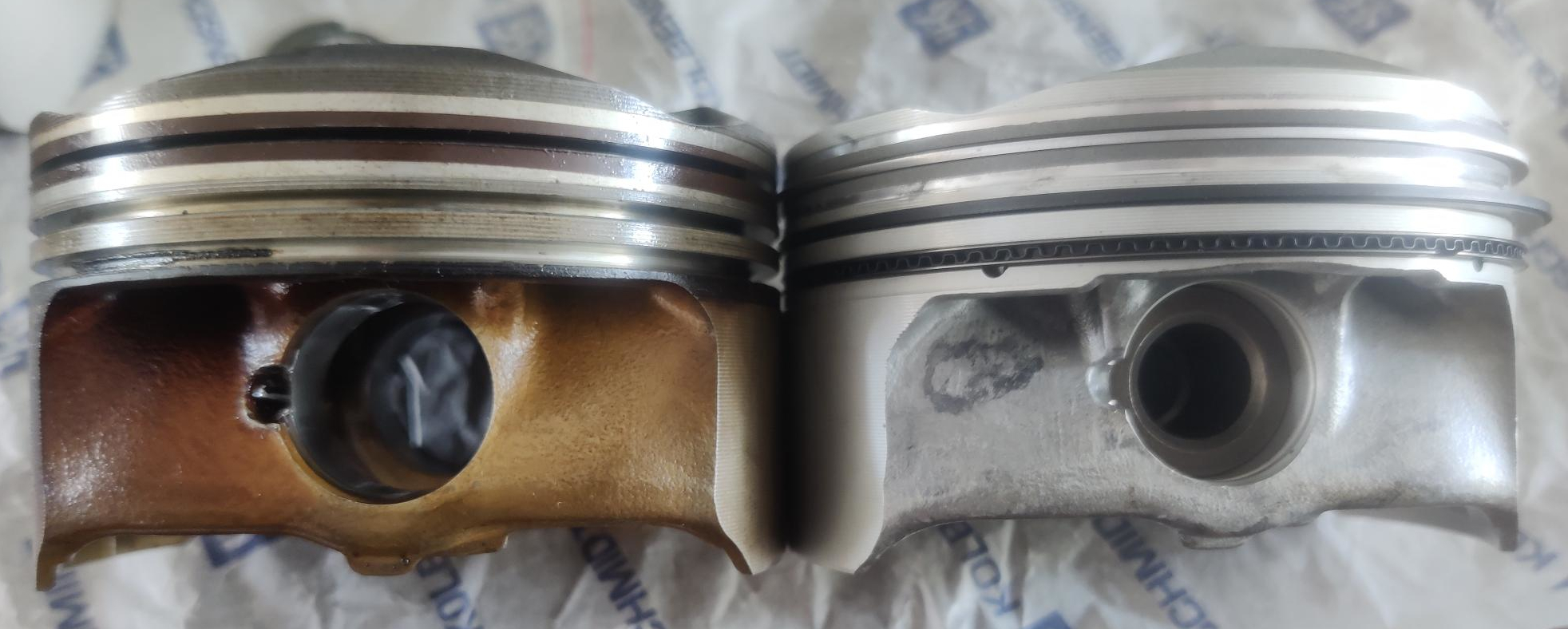
N52b25 old version piston vs updated piston (Re-positioned oil drain holes).
N52b25 with sludged oil control rings and piston drain holes requires fully-synthetic premium oil.
Amongst High-Ester (Diester, Lanolin, Polyol, Synthetic faty acid Esters ...) synthetic passenger car engine oils produced by brands like HPL, Redline, Ravenol, Valvoline, Mobil 1 ... Rule of a thumb, the greater the amount of Ester in a given oil, the more expensive it will be. They tend to have a high value of Oxidation values revealed by VOAs, outsdanding low NOACK (Evaporation loss ratio) values and suprisingly a true VI (Viscosity index) that generally falls below 170, (Very low amount of viscosity improvers if not none, thus no viscosity breakdown at high temperatures and constant loads).
Those with outstanding cleaning properties are usually based on a blend of Esters with Alkylated Naphthalenes (ANs)
This type of oil through short OCIs beside its ability to help rejunevate valve stem seals, should be able to clean the carbon deposits on piston ring lands (The carbon molecules are softened/broken then dispersed in the form of liquid to be trapped by the oil filter), slowly but effectively as long as the fuel used is toptier additived RON95/RON98/RON100 gasoline, fuel treatment with high PEA cleaner is periodically used (Every 3 or 4 tank fillups) and short-trips/idling are minimal/avoided. The cleaning property of Ester/ANs must not be confused with detergents responsible for neutralizing acid, usually based on Calcium/Magnesium. It is also interesting to note that oils that are more resistant to causing piston high temperature oxidation are those with high Flash Point values, generally greater than 240 (Not a general rule). The second type of cleaning oils is premium fully synthetic PCMO blended with a proprietary active cleaning molecule/agent. Some of these oils that have made their reputation are: Some of the best high PEA fuel system cleaners are:- Redline SI-1 CFSC
- BG 44K
- Chevron Techron C+ CFSC (Made in Belgium)
- Liqui Moly Proline DI cleaner
- BerryMan FICUCLC
In case of semi-stuck piston rings or partially-clogged drain holes because of heavy carbon deposits (Not critically worn rings), A faster and more effective approach (Boutique oil additive cleaner) can be performed:
HPL EC30- This additive is based on a PAO/Ester (virgin Oxidation value: 110) and AN blend
- Two 3000 kms oil changes using HPL EC30 (1 liter per 5L of 5W30 Shell HU ECT C3 oil or any BMW LL04 Group III GTL based oil. Best for avoiding conflict of different types of Esters. The Shell HU is made of natural gas + ~20% PAO)
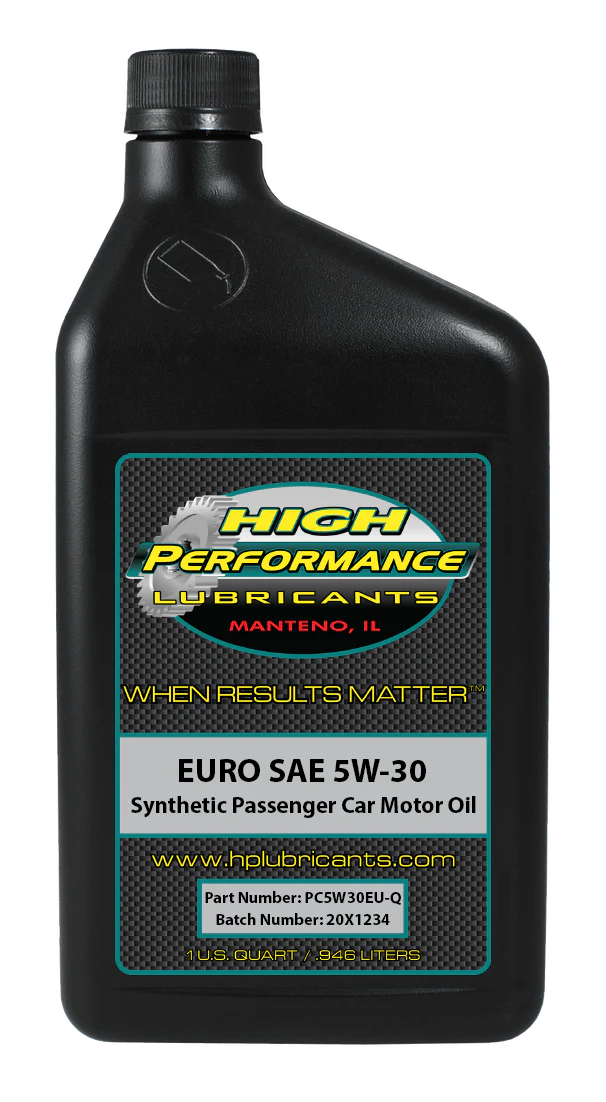
- At least four 5000 Kms oil changes with HPL PCMO Euro 5W30 ideally or one of the oils mentioned above
- Few hundreds of kilometers before each oil change, run one of the PEA fuel cleaners mentioned above
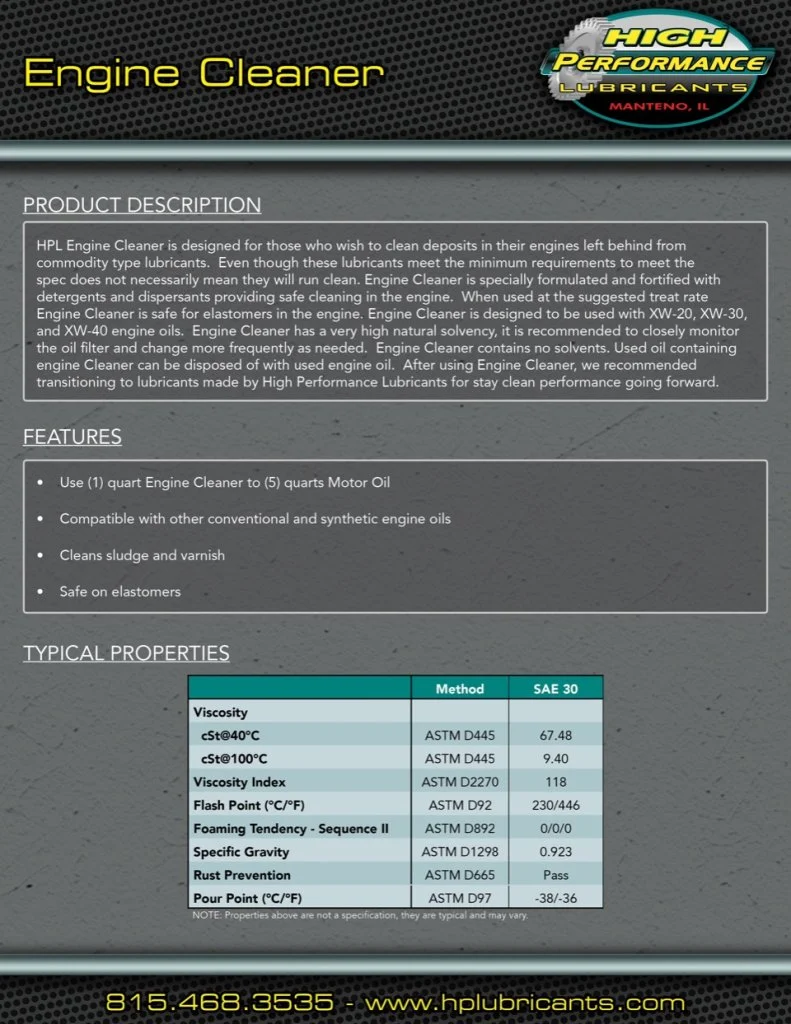
- Powerful yet safe solvent-free engine cleaner designed to free stuck piston rings and clear tiny oil galleries
- Exists in two types, as a complete oil service and as a flush.
- Add one bottle and half to the crankcase right before an oil change and let the engine idle for 10 minutes.
- Do not use if the overall engine has excessive sludge (Oil sump thick tartar, heavily coked cylinder head) not to overwhelm the VVT oil passages.
- This cleaner is best for accelerating the softening of the piston rings deposits at the end of each OCI with one of the oils mentioned above
- Works the same way as BG EPR
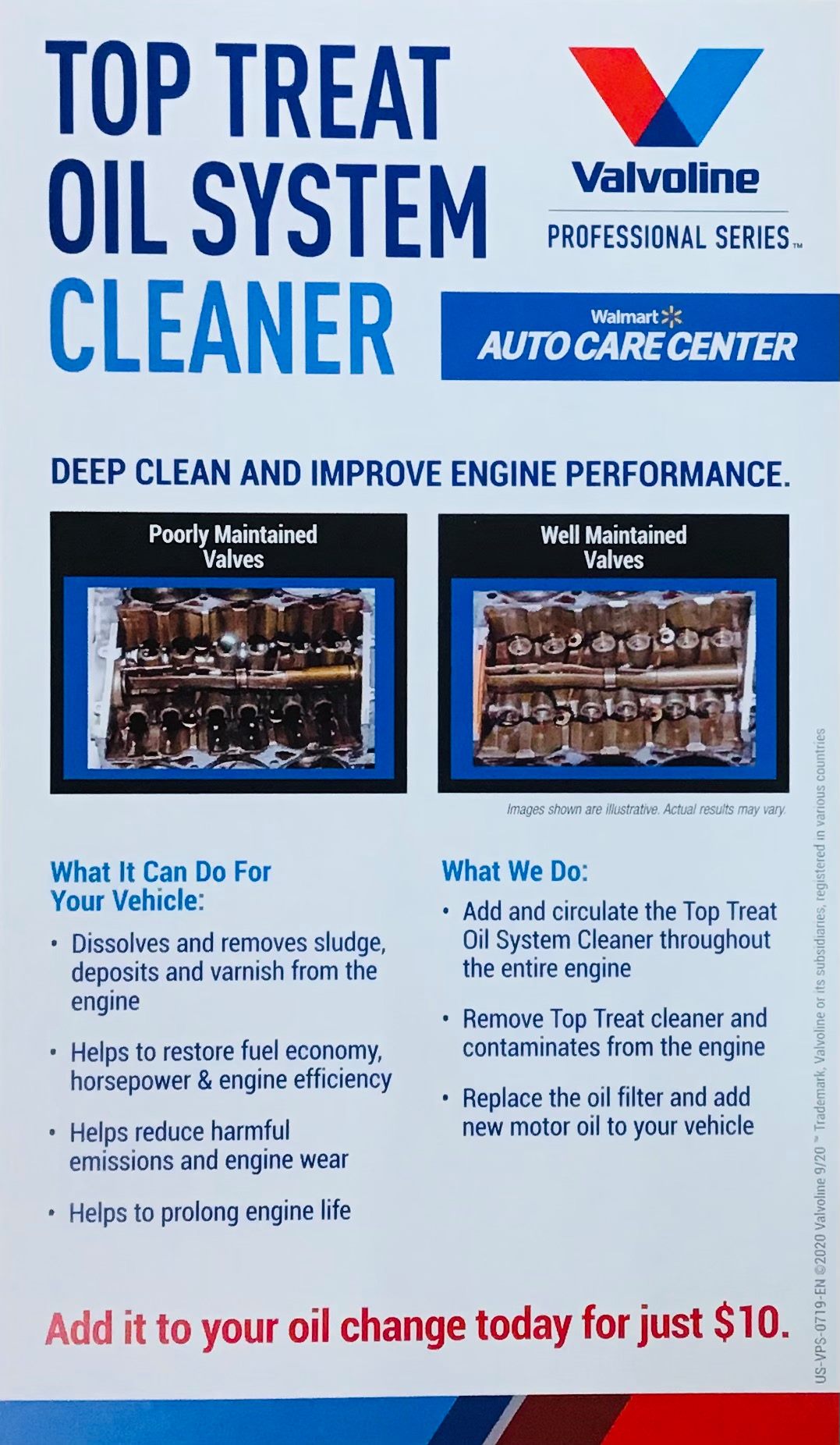
- Hot Shot Secret Stiction Eliminator is specially made to remove the hard carbon produced by burnt oil. The treatment usage for the N52 consists of a dose of 500ml poured into 6 liters of oil.
- At least four 5000 Kms oil changes with HPL PCMO Euro 5W30 ideally or one of the oils mentioned above
- Few hundreds of kilometers before each oil change, run one of the PEA fuel cleaners mentioned above
- Triax Pro EF An excellent boutique concentrated engine cleaner based on PAO/Ester. Solvent-free. One bottle in the crankcase and idle for 15 minutes. Repeat at every oil change (at least 4)
- At least four 5000 Kms oil changes with HPL PCMO Euro 5W30 ideally or one of the oils mentioned above
- Few hundreds of kilometers before each oil change, run one of the PEA fuel cleaners mentioned above
- Xenum M-Flush A boutique engine cleaner. Is solvent-free, seals-safe and does not destroy the oil protective film. One bottle for 100km should dissolve a good amount of piston carbon
- At least four 5000 Kms oil changes with HPL PCMO Euro 5W30 ideally or one of the oils mentioned above
- Few hundreds of kilometers before each oil change, run one of the PEA fuel cleaners mentioned above
- Auto RX Plus is based on the natural Laninol esters and is designed to safely break piston deposits.
- 1 or 2 bottles blended with a GTL based oil. Preferebally Shell HU.
- At least one 5000 Kms OCI with the cleaner
In case of semi or completely stuck piston rings, a correctly performed piston soak method can drive the oil consumption down by at least 3 or 4 times (This method can be repeated 2 or 3 times to get satisfactory results unless the rings are already severly worn-out). It is based on using a highly concentrated solvent-based fuel system cleaner. Products that proved to be extremely effective are:
- AcDelco FSC and UC cleaner X66P 88861803 (GM endorsed but very Hard to get)
- Chemtool BerryMan B12
- BG 44K (GM endorsed)
- Redline SI-1
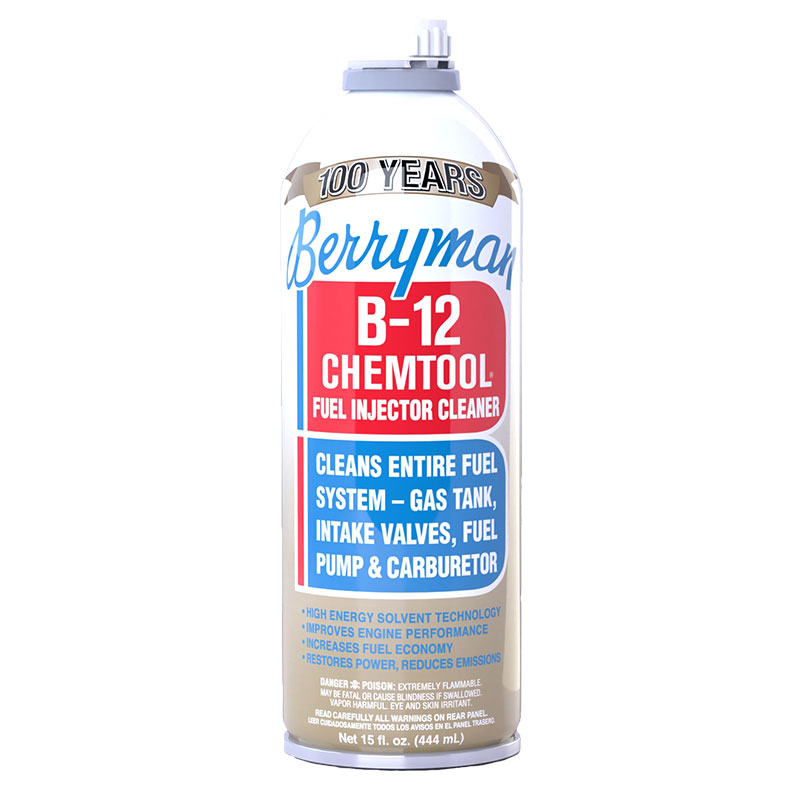
- Use Berryman Chemtool B12 as the cleaning substance. If You can't get a hand on B12, what you need to know is that the main carbon dissolving is made by the mixture of Toluene and Acetone which is what some Brake cleaners are generally made of.
- Otherwise, you can use a mix of 20% Acetone, 50% Toluene, 20% ATF and 10% isopropyl alcohol.
- In Europe, B12 can be found online at the Polish Carbon Clean Shop
- The Engine must be cold. Cylinder head and crankcase temperatures not beyond 40°C.
- The target Cylinder should be at BDC. Using the crank (Breaker bar with a 22mm socket) and then moving 25° back and forth. to effectively shake the B12 fluid.
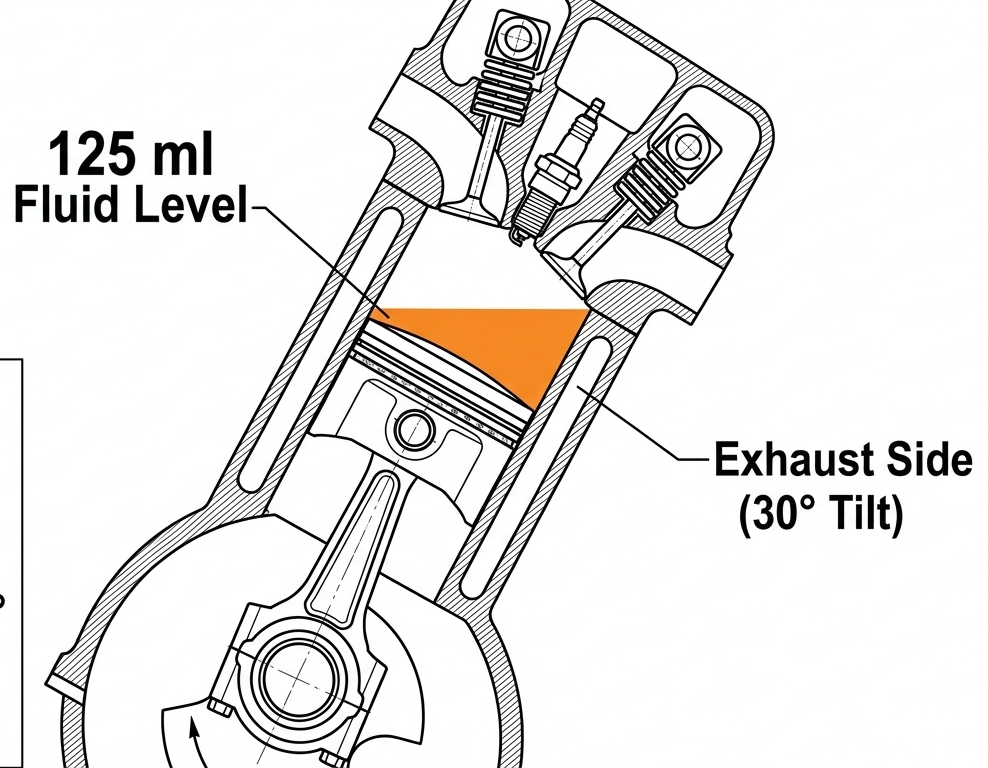
- Setting the Cylinder at BDC is very important. As the N52 is tilted to the exhaust side by around 30°.
- Once your pour B12, while the Cylinder is at BDC, let it sit for few hours then turn the crank manually 8 or 10 times to allow the fluid to circulate through all around the rings.
- If you observe that the fluid has drained at a faster rate, add some spoons so that the whole piston crown gets covered again.
- Repeat turning the crank manually every 2 hours or so so that the B12 finds its way to the ring lands. Do that 4 times during the day. Add B12 if necessary. Some of it may escape to the crankcase in case of full stuck compression rings.
- Thread the spark plugs back in to avoid B12 liquid evaporation. Only 2 or 3 threads in
- Let B12 soak overnight before turning the crank manually again
- The fluid after few hours, will likely get past the rings, fill the ring grooves and then drain to the crankcase. Pour more B12 onto the cylinders and wait at least 4 hours before turning the crank manually 8 or 10 times. The purpose is to distribute the fluid evenly on the piston crown and help it flow through around pistons rings. BerryMan technical support recommends 60-90 ml per cylinder. That is for a flush flat cylinder. However for the N52, much more is needed.
- Normally in order to flood the whole N52 piston edges with the fluid, 60 ml is insufficient. At least 125 ml is required while the piston is at around BDC.
- The N52b25 for example has a bore of 82 mm and a stroke of 78.8 mm. Knowing the engine is tilted 30° to the exhaust side, we need at least 125 ml
to cover the whole piston crown but not more than 350 ml as a safe maximum. This is the key point to a succesful/failed piston soak on a tilted engine.
The mistake most mechanics make is pouring a safe quantity of B12 which ends up soaking only a part of the piston crown.
So even with the help of rocking the piston with the crank to distribute the fluid, only the lower part of the piston gets correctly treated
and not the upper intake part. This in some cases can worsen the sealing of the compression rings and thus cause cylinder compression partial loss.
- Pour more B12, wait at least 4 hours and crank again few times. Ideally use a tube similar to XADO Red Anticarbon
- When done, it is mandatory to make sure you vacuum out remainders of B12 and broken carbon chunks from the cylinders. Use a powerful device. Otherwise the engine will be hydrolocked
- Vacuum out any left B12 from the the top of the catalytic converters eventually, through the upstream O2 sensors holes. B12 is extremely flammable. Once the engine starts, this could easily trigger a fire hazard inside the converter.
- Change the oil and eventually the filter (Make sure to prefill the filter). Use a cheap 5W30 sacrificial oil. The purpose is to change again the oil after driving the car later for 40 minutes. This way, we are sure the B12 is completely flushed from the oil system.
- Pour a tiny amount of thin oil (~ 30ml) through the spark plug wells, and turn the crank manually 5 or 6 times. Use a long thin flexible spray tube to be able to reach all edges. This is to avoid that the engine starts on dry cylinder walls and piston rings.
- B12 will strip all the protective oil film from the cylinder walls and the piston rings. It is mandatory to lube these latter before cranking the engine. Failure to do so, will result eventually in scored cylinder wall and loss of compresssion
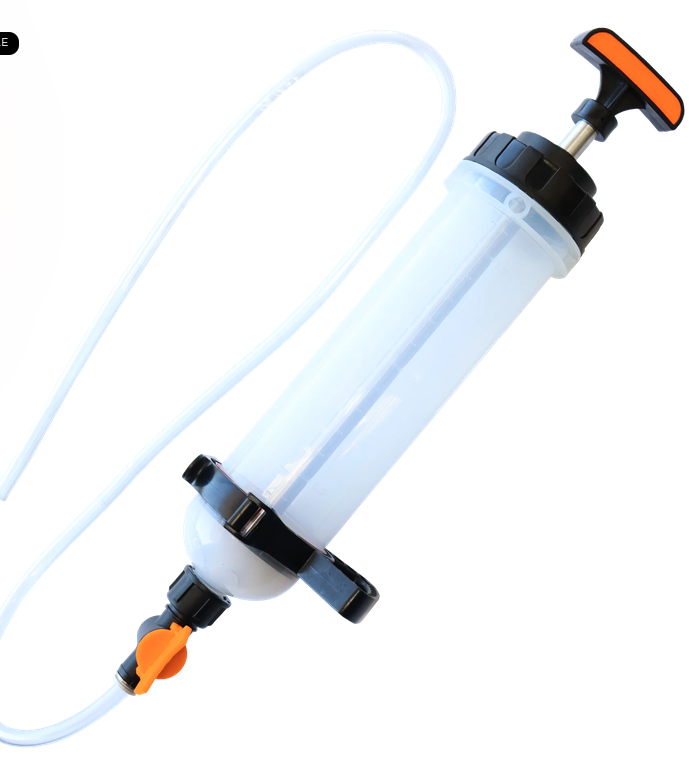
- Vacuum out the excess oil from each cylinder. A syringe with a long tube should do. Extracted fluid must not be stored in plastic.
- It is strongly advised to plug a strong power supply to avoid heavy battery discharge
- Before even starting the Piston soak, make sure the battery is fully charged.
- At this point you may use the starter to crank the engine 8 or 10 times. This will eject any excess oil/fluid from the spark plug hole. cover the engine cover with a large microfiber, as the oil/fluid will splash all over the engine bay. B12 will instantly damage the paint clear coat and melt plastic.
- Plug the spark plugs back, re-connect ignition coils and reconnect the fuel injectors wire harness strip.
- Keep the power supply connected if needed, and attempt to start then engine.
- The engine may start with difficulty the first time and run rough with gray smoke from the tailpipe. Let it idle for 10~15 minutes before driving. First drive trip should be gentle.
- TIP 1: Since the engine is angled down towards the exhaust side position (30°), jacking the car on the front right side, would help the B12 substance to be distributed more evenly around the piston crown
- TIP 2: To help on avoiding cylinder wall scoring, put Liqui Moly Ceratec into the oil, 300/500 kms before starting the soaking operation. CeraTec will form a protective solid ceramic film on engine internals.
- TIP 3: If possible, measure compression in every cylinder before starting the soaking procedure and inspect each one of them using a borescope camera with double vision. A scored cylinder bore or dented piston will not be fixed by a piston soak.
- TIP 4: Ideally change the oil twice before going for an italian tuneup to clear catalytic converter and break-in any unstuck piston ring
Once the piston soak procedure is finished (successful), the driver must continue using one of the oils mentioned above, ideally Valvoline Restore & Protect ACEA C3 which has a proprietary oil additive capable of dissolving stubborn carbon from the piston ring lands.
For curiosity, BC B12 composition is as follows
- Toluene (40-50%)
- Acetone (20-25%)
- Methanol (20-25%)
- 2-Butoxyethanol (Less than 5%)
- Methyl Ethyl Ketone (MEK) (less than 5%)
- Isopropyl Alcohol (less than 5%)
Let us note that the N52b25 that came with Low Compression pistons (S858A) (9.7:1 instead of 10.7:1 or 11.0:1) was not affected by the oil consumption:
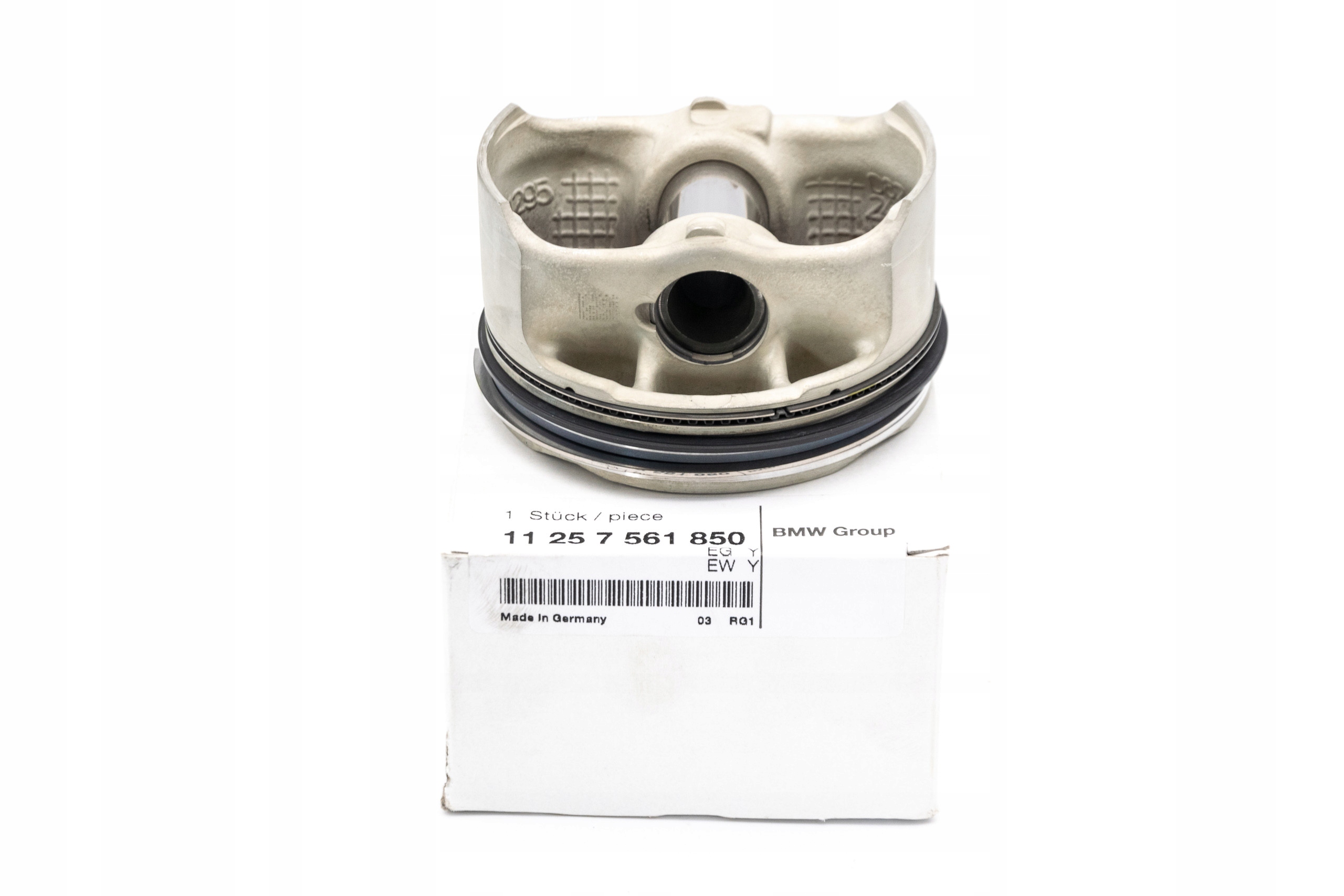
N52b25 low compression engine piston ( S858A). (This piston was not affected by the oil burning issue as the oil drain holes were correctly positioned).
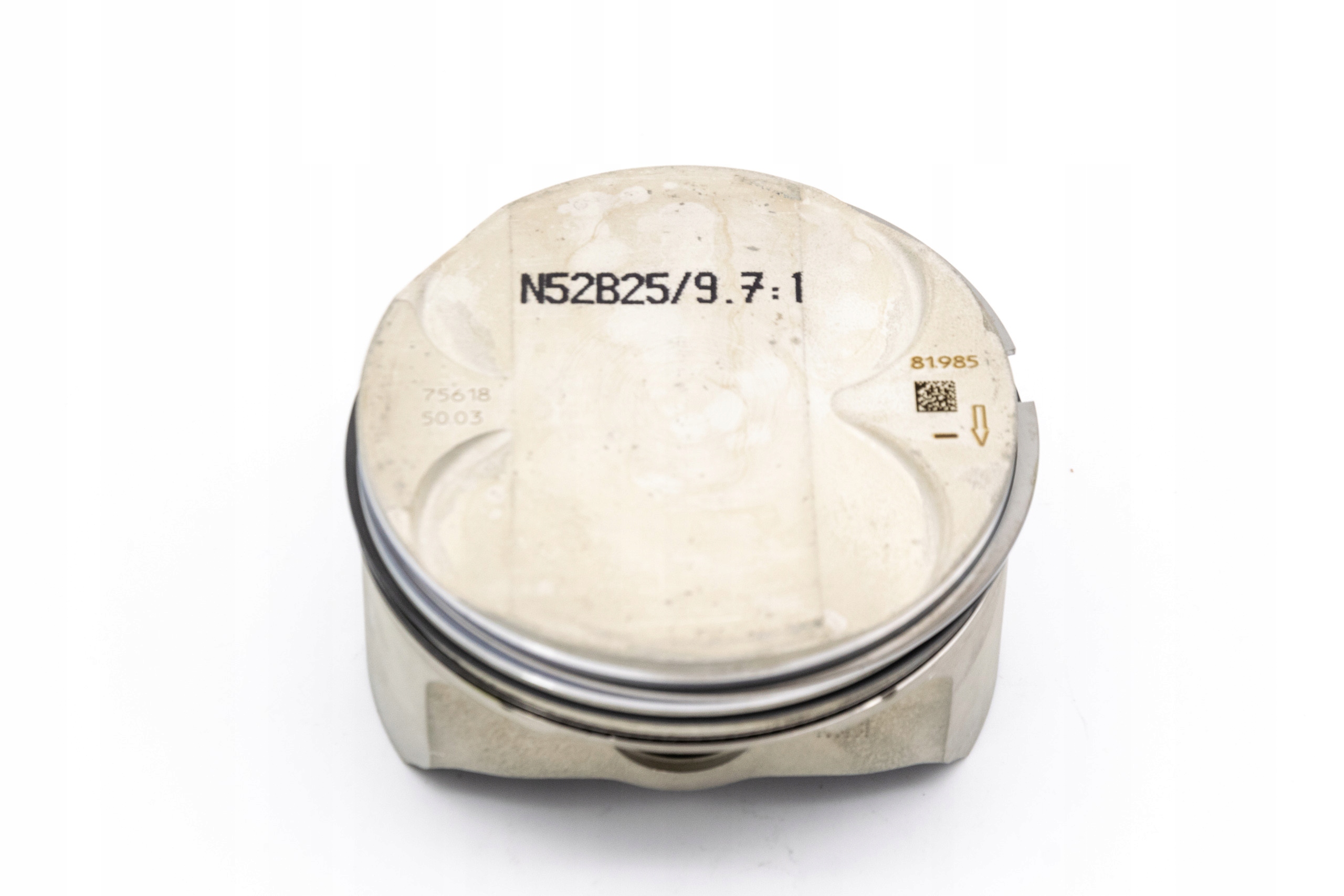
N52b25 low compression engine piston. (This piston was not affected by the oil burning issue as the oil drain holes were correctly positioned).
Cooling system
3Malfunctioning cooling system causing the engine to run very hot and thus the oil to thin out
.Climate
3Hot climate regions like middle-east
.Driving style
2Short journeys
Frequent spirited drivesValve seals
1Worn Valve Stem Seals (Oil seeps into the combustion chamber, past the valve seals, and gets burned).
N52 exhaust valve seals prior to mid-2006.Crankcase Ventilation System
1Stuck open/close CCV system
CCV Diaphragm and/or CCV hosesLow Oil quality
2Oil incorrect grade and specifications
Very long oil service intervalsSevere oil pan leak
3.
.